Creating a Learning Platform


how this episode connects together.
Follow AJ from first principles to production-ready architecture.
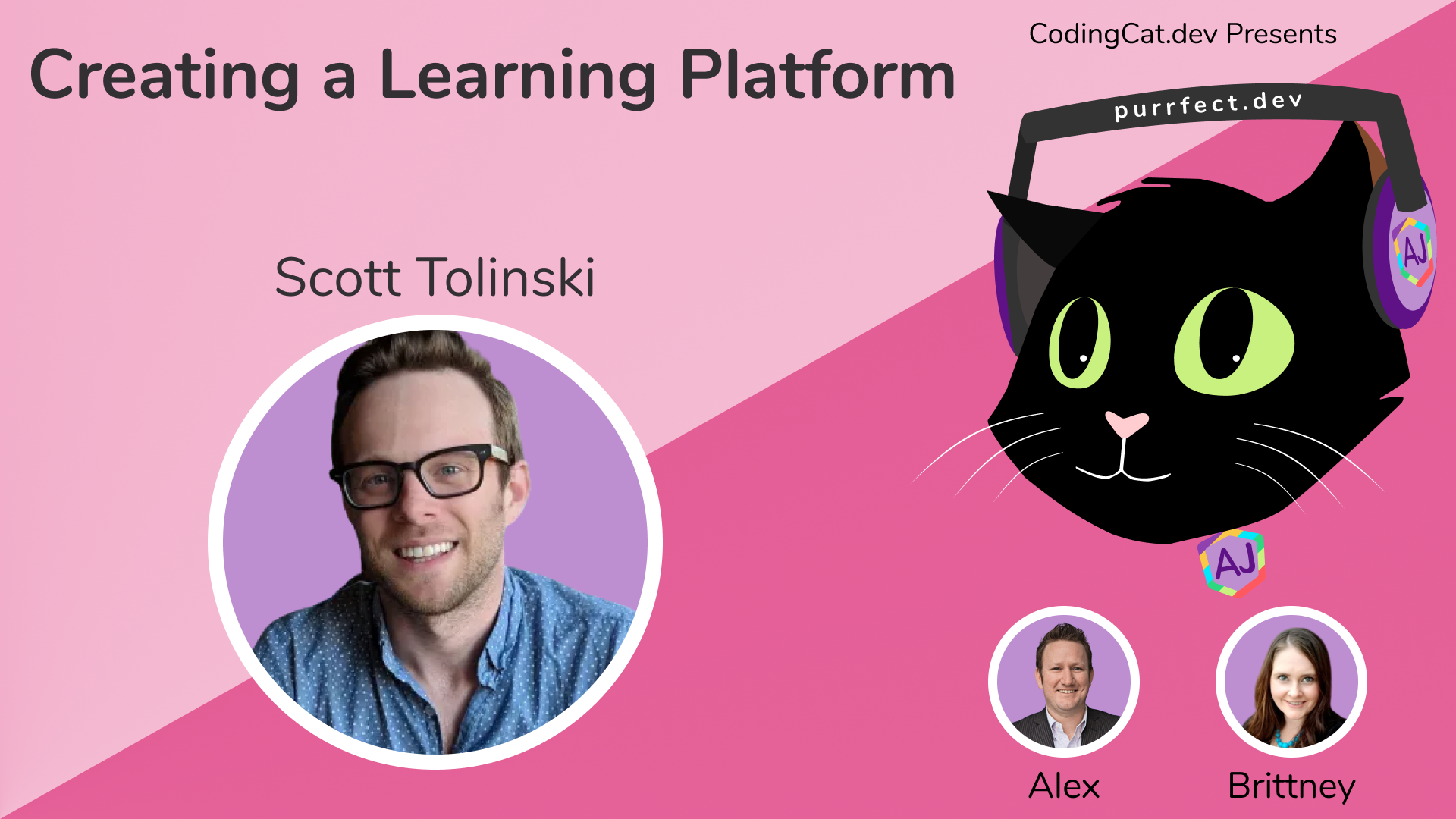
Creating a Learning Platform is a CodingCat.dev podcast episode featuring Scott Tolinski alongside Alex Patterson and Brittney Postma focused on Svelte, Node.js. We talk with Scott Tolinkski of LevelUpTutorials all about his past and why he started his Learning Platform. 1.13 - Creating a Learning Platform: https://codingcat.dev/podcast/1-13-creating-a-learning-platform 0:00 - Intro
0:43- Scott Tolinski
4:21 - How did you start to create a learning platform?
9:33 - Finding your niche
11:56 - Staying humble
15:00 - How Level Up Tutorials was born
15:53 - How did you decide whether to grow your own plat Watch the full video breakdown on YouTube or explore the architectural notes, chapters, and official documentation links below.
Questions
- When did you first decide to create your own Learning Platform?
- Was there a reason behind starting Level Up Tutorials?
- Did you ever consider just using something like Udemy?
- You have been through several iterations of hosting, code base…
- For someone getting started right now (like us), what would you suggest we consider?
- You just moved off of Meteor, what caused the move?
- Why do you use CRA over something like Next.js?
- How did you build your audience?
- Was it a specific tutorial that helped you really get started?
- Where do you get ideas for your courses?
- Do you look for popular tech to create your content or just do what is exciting for you?
- Would you say that it is more important to get a single course "perfect", or to focus on having a large variety of courses available?
- You release your courses on a monthly basis, what happens if you had just a little bit more that you want to add to that Course?
Technical Overview: Creating a Learning Platform
1.13 - Creating a Learning Platform: https://codingcat.dev/podcast/1-13-creating-a-learning-platform 0:00 - Intro
0:43- Scott Tolinski
4:21 - How did you start to create a learning platform?
9:33 - Finding your niche
11:56 - Staying humble
15:00 - How Level Up Tutorials was born
15:53 - How did you decide whether to grow your own plat
When applying the concepts from Creating a Learning Platform in a production codebase, teams working with Svelte, Node.js should align their implementation with the Svelte & SvelteKit Documentation (Runes, compiler internals, and full-stack SvelteKit routing). Structuring your workflow around repeatable patterns, automated verification, and clear separation of concerns helps prevent regressions as your application scales.
Key Engineering Takeaways
- Core Topic Focus: Practical strategies for Svelte, Node.js covered in "Creating a Learning Platform" (We talk with Scott Tolinkski of LevelUpTutorials all about his past and why he started his Learning Platform.).
- Production Implementation: Combine the architectural patterns demonstrated in this podcast with the official Svelte & SvelteKit Documentation for type safety, performance, and long-term maintainability.
- Hands-On Video Walkthrough: Follow along with the live coding demos and discussion on YouTube (Creating a Learning Platform) and subscribe to CodingCat.dev on YouTube for weekly deep dives.
Video Chapters & Timestamps
Jump directly to any segment of Creating a Learning Platform on YouTube using the timestamped chapters below:
- 00:00: Intro
- 00:00: How did you start to create a learning platform?
- 00:00: Finding your niche
- 00:00: Staying humble
- 00:00: How Level Up Tutorials was born
- 00:00: How did you decide whether to grow your own platform or join a large company?
- 00:00: What motivates you to create each course?
- 00:00: How do you make your courses interesting to an audience?
- 00:00: How do you decide the right length for your courses?
- 00:00: Evolving away from Meteor to create your own platform
- 00:00: Server Side Rendering
- 00:00: How do you produce your videos?
- 00:00: What opportunities are there to make the video production process more efficient?
- 00:00: Involving new authors with your platform
- 00:00: Affiliate links
- 00:00: How do you submit proposals to Level Up Tutorials?
- 00:00: Growing an audience
- 00:00: Which social media outlets are best to build an audience?
- 00:00: Just keep swimming
- 00:00: Purrfect Picks
Resources, Links & Official Documentation
- Watch on YouTube: Creating a Learning Platform Full Video (plus Subscribe to CodingCat.dev)
- Show Pick: Deno (picked by Alex Patterson)
- Show Pick: Animating Svelte (picked by Brittney Postma)
- Show Pick: Remarkable (picked by Scott Tolinski)
- Scott Tolinski Guest Profile & Episodes on CodingCat.dev
- Scott Tolinski on GitHub
- Svelte & SvelteKit Documentation: Runes, compiler internals, and full-stack SvelteKit routing
- Node.js API Reference: Event loop, streams, native fetch, and server-side JavaScript
Related CodingCat.dev Tutorials & Podcast Episodes
- Creating and Using Kendo UI: We have Alyssa Nicoll and Kathryn Grayson from Progress teach us all about KendoUI and how they maintain this frontend library.
- Data Connect: All About Schemas in Firebase: Web Architecture & Implementation Guide: Hands-on web engineering breakdown of "Data Connect: All About Schemas" (2025-02-11). Learn how to integrate Firebase, Google Cloud, Web Dev, SQL in production ...
- Supabase New Release: Supabase dropped a lot of new features during their X launch, I review these with Jon.
Frequently Asked Questions (FAQ)
What are the main takeaways from Creating a Learning Platform?
We talk with Scott Tolinkski of LevelUpTutorials all about his past and why he started his Learning Platform. 1.13 - Creating a Learning Platform: https://codingcat.dev/podcast/1-13-creating-a-learning-platform 0:00 - Intro
0:43- Scott Tolinski
4:21 - How did you start to create a learning platform?
9:33 - Finding your niche
11:56 - Staying humble
15:00 - How Level Up Tutorials was born
15:53 - How did you decide whether to grow your own plat Throughout this podcast, Scott Tolinski breaks down real-world implementation details for Svelte, Node.js so developers can apply these patterns directly in production.
How do you implement Svelte best practices in production?
When adopting Svelte and Node.js in a production stack, start by validating your configuration against the Svelte & SvelteKit Documentation (Runes, compiler internals, and full-stack SvelteKit routing). Focus on incremental adoption, automated testing, and observability so your team can measure performance and developer velocity improvements at each stage.
Where can I watch the full Creating a Learning Platform walkthrough and find related code resources?
You can watch the complete video session for Creating a Learning Platform on the CodingCat.dev YouTube channel. For a deeper dive into Svelte, check out our related guide: Creating and Using Kendo UI.
✏️ Episode Summary
1.13 - Creating a Learning Platform: https://codingcat.dev/podcast/1-13-creating-a-learning-platform 0:00 - Intro 0:43- Scott Tolinski 4:21 - How did you start to create a learning platform? 9:33 - Finding your niche 11:56 - Staying humble 15:00 - How Level Up Tutorials was born 15:53 - How did you decide whether to grow your own plat