





Kinsta
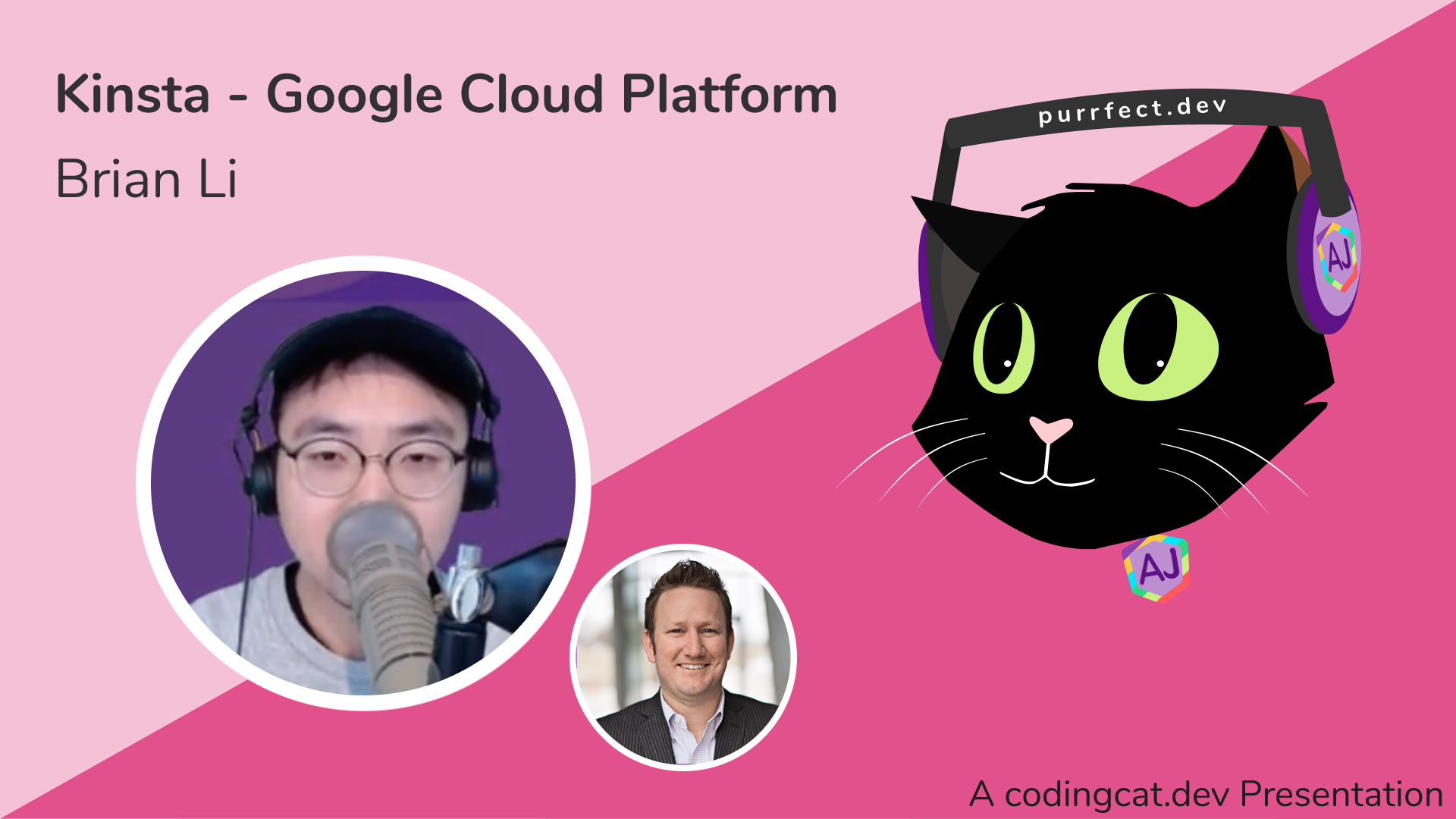


Kinsta is a CodingCat.dev podcast episode featuring Brian Li alongside Alex Patterson focused on Google Cloud, PHP, AWS. Talking with Brian Li all about WordPress hosting provider Kinsta and why they chose to utilize Google Cloud Platform. 1.2 - Kinsta with Brian Li: https://codingcat.dev/podcast/1-2-kinsta-brian-li 00:00 - Intro
00:38 - Brian Li
02:00 - CodingCatDev Journey
04:56 - Shared Hosting vs VSP vs Dedicated
10:26 - Containerized Sites on GCP
14:47 - MariaDB
19:00 - Addon Redis Cache
22:00 - PHP Workers
28:00 - GCP vs AWS Pricing
34:00 - Customer Cost Watch the full video breakdown on YouTube or explore the architectural notes, chapters, and official documentation links below.
General Questions
What is the difference between shared hosting, VPS, or dedicated hosting?
Why did Kinsta decide to use the shared container approach? https://kinsta.com/blog/google-cloud-hosting/#4-improved-performance?kaid=XIIHFPADWOKE
Is this mainly for security, or speed or reliability?
**Is pricing the biggest deciding factor for moving to GCP?
Is this savings passed to the customer? Let’s say that GCP gets even cheaper will my bill go down?**
Performance
With CodingCatDev we have LearnDash LMS as well as Buddy Boss, both of these use heavy transactional data, would it be possible to use something faster for the database?
What is MariaDB https://mariadb.org/?
Why Kinsta?
What is the real difference between Kinsta and someone else?
Technical Overview: Kinsta
1.2 - Kinsta with Brian Li: https://codingcat.dev/podcast/1-2-kinsta-brian-li 00:00 - Intro
00:38 - Brian Li
02:00 - CodingCatDev Journey
04:56 - Shared Hosting vs VSP vs Dedicated
10:26 - Containerized Sites on GCP
14:47 - MariaDB
19:00 - Addon Redis Cache
22:00 - PHP Workers
28:00 - GCP vs AWS Pricing
34:00 - Customer Cost
When applying the concepts from Kinsta in a production codebase, teams working with Google Cloud, PHP, AWS, Redis should align their implementation with the Google Cloud Architecture & Docs (Cloud Run, Kubernetes Engine, BigQuery, and Vertex AI guides). Structuring your workflow around repeatable patterns, automated verification, and clear separation of concerns helps prevent regressions as your application scales.
Key Engineering Takeaways
- Core Topic Focus: Practical strategies for Google Cloud, PHP, AWS, Redis covered in "Kinsta" (Talking with Brian Li all about WordPress hosting provider Kinsta and why they chose to utilize Google Cloud Platform.).
- Production Implementation: Combine the architectural patterns demonstrated in this podcast with the official Google Cloud Architecture & Docs for type safety, performance, and long-term maintainability.
- Hands-On Video Walkthrough: Follow along with the live coding demos and discussion on YouTube (Kinsta) and subscribe to CodingCat.dev on YouTube for weekly deep dives.
Video Chapters & Timestamps
Jump directly to any segment of Kinsta on YouTube using the timestamped chapters below:
- 00:00: Intro
- 00:00: Brian Li
- 00:00: CodingCatDev Journey
- 00:00: Shared Hosting vs VSP vs Dedicated
- 00:00: Containerized Sites on GCP
- 00:00: MariaDB
- 00:00: Addon Redis Cache
- 00:00: PHP Workers
- 00:00: GCP vs AWS Pricing
- 00:00: Customer Cost Savings
- 00:00: Purrfect Picks
Resources, Links & Official Documentation
- Watch on YouTube: Kinsta Full Video (plus Subscribe to CodingCat.dev)
- Show Pick: Mac Pro (picked by Alex Patterson)
- Show Pick: Cloudflare Pages (picked by Brian Li)
- Brian Li Guest Profile & Episodes on CodingCat.dev
- Brian Li on GitHub
- Google Cloud Architecture & Docs: Cloud Run, Kubernetes Engine, BigQuery, and Vertex AI guides
- PHP Official Manual: Zend Engine runtime, security hardening, and language reference
- AWS Documentation & Builder Center: Cloud architecture, serverless compute, IAM, and managed services
Related CodingCat.dev Tutorials & Podcast Episodes
- Running the Cloud on Your Desktop with LocalStack: Tired of AWS running in the cloud, how about right on your desktop?
- Next.js Deployment Adapters: A bright future for Next.js on Google Cloud in Firebase: Web Architecture & Implementation Guide: Hands-on web engineering breakdown of "Next.js Deployment Adapters: A bright future for Next.js on Google Cloud" (2026-03-26). Learn how to integrate Firebase, ...
- Fueld.AI's nutrition coach with Firebase and Google Cloud: Web Architecture & Implementation Guide: Hands-on web engineering breakdown of "Fueld.AI's nutrition coach with Firebase and Google Cloud" (2025-06-25). Learn how to integrate Firebase, Google Cloud, W...
Frequently Asked Questions (FAQ)
What are the main takeaways from Kinsta?
Talking with Brian Li all about WordPress hosting provider Kinsta and why they chose to utilize Google Cloud Platform. 1.2 - Kinsta with Brian Li: https://codingcat.dev/podcast/1-2-kinsta-brian-li 00:00 - Intro
00:38 - Brian Li
02:00 - CodingCatDev Journey
04:56 - Shared Hosting vs VSP vs Dedicated
10:26 - Containerized Sites on GCP
14:47 - MariaDB
19:00 - Addon Redis Cache
22:00 - PHP Workers
28:00 - GCP vs AWS Pricing
34:00 - Customer Cost Throughout this podcast, Brian Li breaks down real-world implementation details for Google Cloud, PHP, AWS so developers can apply these patterns directly in production.
How do you implement Google Cloud best practices in production?
When adopting Google Cloud and PHP in a production stack, start by validating your configuration against the Google Cloud Architecture & Docs (Cloud Run, Kubernetes Engine, BigQuery, and Vertex AI guides). Focus on incremental adoption, automated testing, and observability so your team can measure performance and developer velocity improvements at each stage.
Where can I watch the full Kinsta walkthrough and find related code resources?
You can watch the complete video session for Kinsta on the CodingCat.dev YouTube channel. For a deeper dive into Google Cloud, check out our related guide: Running the Cloud on Your Desktop with LocalStack.
✏️ Episode Summary
1.2 - Kinsta with Brian Li: https://codingcat.dev/podcast/1-2-kinsta-brian-li 00:00 - Intro 00:38 - Brian Li 02:00 - CodingCatDev Journey 04:56 - Shared Hosting vs VSP vs Dedicated 10:26 - Containerized Sites on GCP 14:47 - MariaDB 19:00 - Addon Redis Cache 22:00 - PHP Workers 28:00 - GCP vs AWS Pricing 34:00 - Customer Cost
how this episode connects together.
Follow AJ through the pipeline topology from input contract to production output.