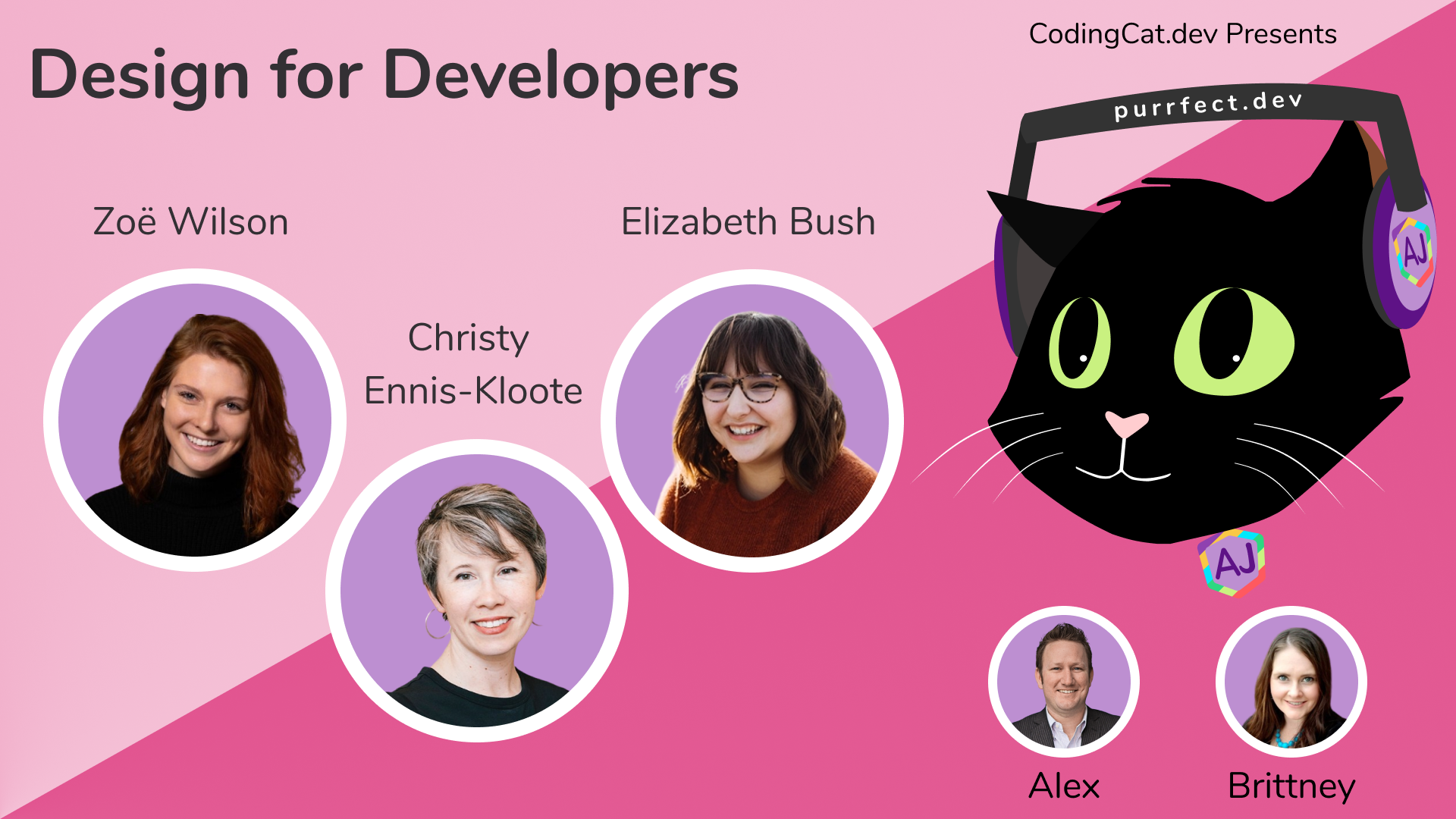
Design for Developers


Questions
- I noticed you studied Industrial design. How did you find your way to UX or Interaction design?
- From the team to the community, are there patterns you see in each?
- Opinions on education paths…bootcamps vs. institutions vs. workshops.master’s programs
- Do you need formal education around UX/UI?
- What advice would you give to others coming out of school and how to get started into the design side of a web development practice?
- Resources, tools?
- If someone not going to school wants to get started, how do you get in the door first?
- Networking – reaching out to people you admire
- Soft Skills (importance of consulting and speaking skills)
- Where does your community hang out? Especially after 2020?
- Meeting community where they platform
- Why do people thrive in communities?
- What communities exist or are accessible?
Clubhouse, Meet ups (local and online), AIGA, IxDA Community events (Code for Good / Givecamp, Global Service Design Jam, Courses / Co-Learning) / Ladies of UX / - What should a designer learn today?
Attitude & aptitude – curiosity & willingness to learn Mentor / find leaders to learn from Online, self-driven learning (courses, youtube, google) - Tools? Sketch, Figma, Miro, Adobe Products
- Designers often work together and collaborate, how did this change in 2020?
- At work?
Miro, drawing messy, white board type work. - A developer can do the work, but often they need to be led down the path. Do you see this as a designers role, or more of an architect’s role?
- Are mobile designers different from web designers?
(platform agnostic?) Multi-modal Physical Design, Interactive Points, how do you manage expectations. - What is hardest about being a designer?
- What is hard about getting started.
(Constraint, confidence & expression), non-stop pitching - How can you be creative, but still need to work within a framework?
Constraints are helpful, Design systems - What Physical devices are you using?
iPad / Wacom Tablet, Old school – Sticky notes / Whiteboard / sketchbook - Where can designers get started on the side, for freelance work? Dribbble, Pinterest, Fiverr, Instagram, 99designs, Awwwards
Video Chapters & Timestamps
Jump directly to any segment of Design for Developers on YouTube using the timestamped chapters below:
- 00:00: Intro
- 00:00: Elizabeth
- 00:00: Zoe
- 00:00: Christy
- 00:00: How did you get started in UX?
- 00:00: 4 year degree transitioning
- 00:00: No formal degree background
- 00:00: 2 year background/ remote learning
- 00:00: Hiring for different backgrounds
- 00:00: Difference in school and real world skills
- 00:00: Learning resources
- 00:00: Creating communities
- 00:00: Meetups and lurkers
- 00:00: Social Interactions
- 00:00: Discord
- 00:00: Clubhouse
- 00:00: Tools for Design
- 00:00: Figma Collaboration
- 00:00: Moving away from physical design tools
- 00:00: Real-time collaboration
Resources, Links & Official Documentation
- Watch on YouTube: Design for Developers Full Video (plus Subscribe to CodingCat.dev)
- Show Pick: Config: Figma's Annual Conference (picked by Alex Patterson)
- Show Pick: Adobe Wire Frame Podcast (picked by Brittney Postma)
- Show Pick: Sackboy (game) (picked by Brittney Postma)
- Show Pick: Peter Merholtz & JessieJames Garret, Finding our way (podcast) (picked by Christy Ennis-Kloote)
- Show Pick: Essentialism: The Disciplined Pursuit of Less (picked by Christy Ennis-Kloote)
- Show Pick: The Design Better Podcast (picked by Zoë Wilson)
- Show Pick: Headspace (app) (picked by Zoë Wilson)
- Show Pick: Squads - the global full-stack development community (picked by Elizabeth Bush)
- Christy Ennis-Kloote Guest Profile & Episodes on CodingCat.dev
- Zoë Wilson Guest Profile & Episodes on CodingCat.dev
- Elizabeth Bush Guest Profile & Episodes on CodingCat.dev
- web.dev UI & Design Patterns: Responsive web design, typography, color systems, and UX patterns
Related CodingCat.dev Tutorials & Podcast Episodes
- Design Systems: From Atomic Design to a Global Solution: Dive into the world of creating and maintaining successful design systems, unpack the layer cake approach, and explore the potential future of a global design s...
- Creating a Standardized Design System for the Web: Greg talks with us about running the OpenUI working group. We talk in detail and give demos on standardizing components across the major browser vendors.
- Building & Maintaining Design Systems: Michael Chan talks all about how to build and maintain Design Systems. Brittney and I have a few ideas of our own too.
Frequently Asked Questions (FAQ)
What are the main takeaways from Design for Developers?
Are you struggling to become a designer for web development? You don''t need formal web development training to be successful. Learn from the design group at OST how each of them found a path into design, coming from several different backgrounds. 1.8 - Design for Developers: https://codingcat.dev/podcast/1-8-design-for-developers 0:00 - Intro
1:07 - Elizabeth
1:45 - Zoe
2:27 - Christy
4:00 - How did you get started in UX?
5:40 - 4 year degree transitioning
6:55 - No formal degree background
10:00 - 2 year background/ remote learning
11:00 - Hiring for different backgro Throughout this podcast, Christy Ennis-Kloote and Zoë Wilson and Elizabeth Bush breaks down real-world implementation details for Design so developers can apply these patterns directly in production.
How do you implement Design best practices in production?
When adopting Design in a production stack, start by validating your configuration against the web.dev UI & Design Patterns (Responsive web design, typography, color systems, and UX patterns). Focus on incremental adoption, automated testing, and observability so your team can measure performance and developer velocity improvements at each stage.
Where can I watch the full Design for Developers walkthrough and find related code resources?
You can watch the complete video session for Design for Developers on the CodingCat.dev YouTube channel. For a deeper dive into Design, check out our related guide: Design Systems: From Atomic Design to a Global Solution.
✏️ Episode Summary
1.8 - Design for Developers: https://codingcat.dev/podcast/1-8-design-for-developers 0:00 - Intro 1:07 - Elizabeth 1:45 - Zoe 2:27 - Christy 4:00 - How did you get started in UX? 5:40 - 4 year degree transitioning 6:55 - No formal degree background 10:00 - 2 year background/ remote learning 11:00 - Hiring for different backgro
how this episode connects together.
Follow AJ from first principles to production-ready architecture.