


The Odin Project 8: Backend APIs (Hono vs. Express), Auth & Getting Hired
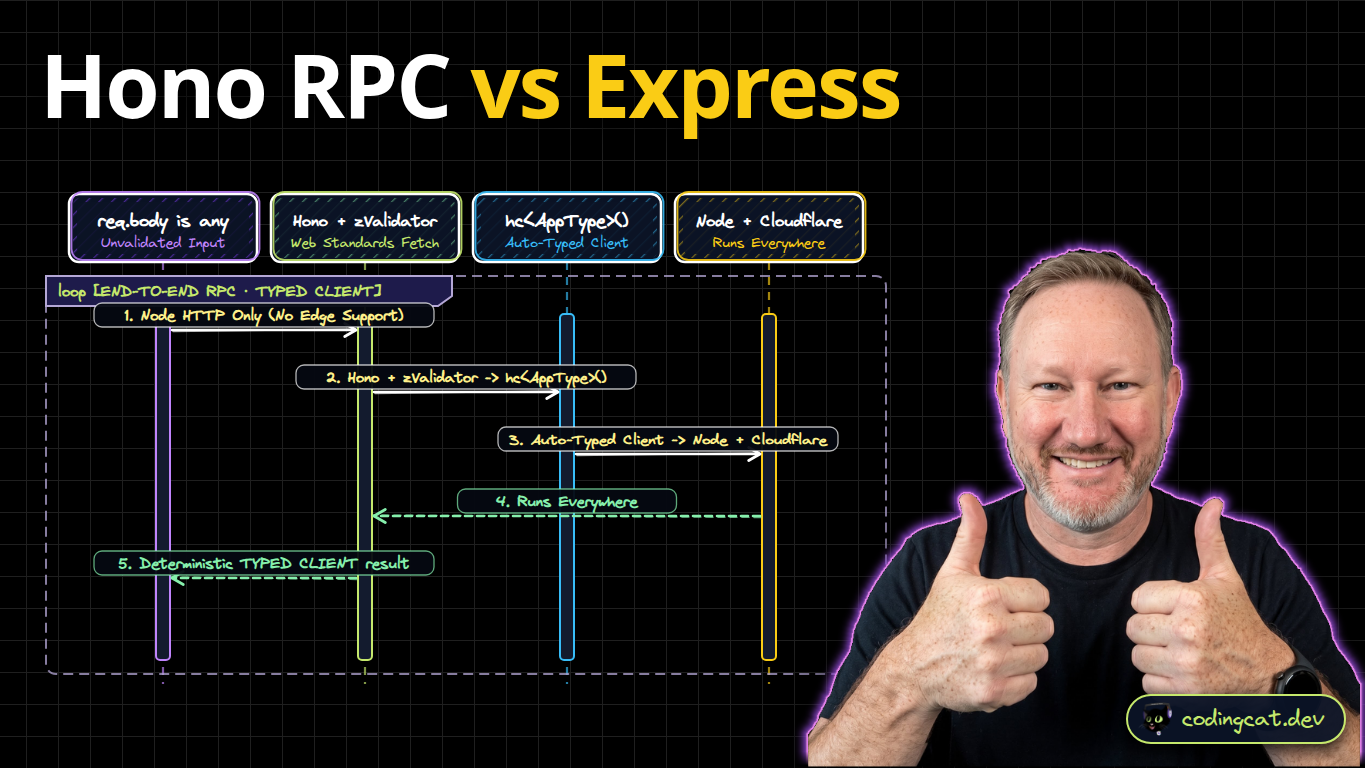

1. Production Architecture Problem & Why We Built This Course
Build end-to-end typed backend APIs with Hono RPC and Zod, implement secure HTTP-only session cookies and OAuth, and master the 2026 engineering portfolio & system design interview. In production engineering teams, the gap between a quick weekend demo and a resilient, multi-tenant system comes down to three architectural boundaries: cold-start latency, compile-time contract validation, and predictable operational cost. Throughout The Odin Project 8: Backend APIs (Hono vs. Express), Auth & Getting Hired, we strip away marketing buzzwords and build the exact TypeScript, edge compute, and structured data patterns that power CodingCat.dev in production.
Every lesson in this course pairs a dark-mode Architecture Diagram (contrasting the legacy anti-pattern on the left against the recommended 2026 production pattern on the right) with copy-pasteable TypeScript modules, automated verification checks, and an explicit Trade-Off Matrix. Whether you are reading the official MDN Web Docs: Core Web Specifications (HTML5, CSS, DOM, Fetch & HTTP) or pairing this course with our deep dive on Course: The Zero-Cold-Start Edge Stack (Astro 7, Cloudflare Workers, D1 & Better-Auth), you can apply every pattern directly to your own repository today.
🐾 AJ's Course Architecture Rule: Never adopt a tool just because it trended on social media. Measure its cold start in milliseconds, verify its TypeScript schema boundary at compile time, and check what happens to your cloud bill when traffic spikes 100x.
2. Lesson-by-Lesson Architectural Walkthrough (2 Lessons)
Work through the lessons in sequence to build the complete system from first principles, or jump directly to the specific architectural boundary you are solving right now:
- Lesson 1: Modern Backend APIs: Why Hono RPC & Zod Replaced Express: Replaces the
LEGACY EXPRESS (req.body is any, Node HTTP Only, Manual Fetch Types)anti-pattern withHono + zValidator -> hc<AppType>() + Node + Cloudflareinsidesrc/api/app.ts. Express was revolutionary twelve years ago, but in 2026 its untyped req.body and Node-only streams hold TypeScript teams back. Let's see why Hono RPC and Zod are the modern backend standard. - Lesson 2: Getting Hired in 2026: Production Portfolios, Open Source & System Design: Replaces the
TOY CLONES (To-Do App Clone, No Tests or CI, Buzzword Resume)anti-pattern with1 Shipped System -> Live Edge URL + Trade-Off FluencyinsideREADME-architecture-template.md. In 2026, anyone can prompt an AI to generate a generic To-Do app in thirty seconds, which means tutorial clones on a resume no longer stand out. Here is what hiring managers actually look for today.
3. Alex's 2026 Ecosystem & Architectural Tier List
Before writing a single line of configuration, you need to know how the available platforms and patterns stack up in real production environments. Here is how I rank the ecosystem from S-Tier (our default production choice on CodingCat.dev) down to D-Tier anti-patterns to avoid:
Alex's 2026 Backend API Framework & Engineering Portfolio Tier List
Ranked from S-Tier (2026 Production Standard) to D-Tier (Legacy Anti-Patterns) across performance, accessibility, type safety, and maintainability.
Hono RPC (hc<AppType>) + @hono/zod-validator on Web Standards Fetch ↗
End-to-End Typed Universal APIValidates JSON, query, and header inputs at the boundary with Zod and exports typeof app so your frontend client gets instant compile-time autocomplete without codegen.
1 Deployed Production App (OAuth + D1 + CI + Architecture Diagram + Trade-Off Table) ↗
2026 Proof-of-Work Portfolio StandardDemonstrates real senior engineering judgment: live sub-10ms edge URL, real authentication, automated GitHub Actions verification, and a 90-second video walkthrough.
Legacy Express.js with Untyped req.body (any) + Manual Fetch Wrappers
2014 Node-Only API PatternTied to Node req/res streams, lacks built-in schema validation, and forces frontend and backend teams to maintain duplicate interfaces manually.
5 Unfinished AI-Prompted To-Do / Weather Clones with No Tests or Auth
Resume Noise Anti-PatternHiring managers can spot an unverified boilerplate clone in five seconds; replace five toy clones with one deep, tested, production-deployed system.
4. Production Starter Configuration & Local Setup
To follow along with the code examples in The Odin Project 8: Backend APIs (Hono vs. Express), Auth & Getting Hired, start with this baseline package.json configuration. It enables strict TypeScript verification, observability tracing, and local development bindings that match production 1-to-1:
{
  "name": "course-odin-8-nodejs-backend",
  "private": true,
  "type": "module",
  "scripts": {
    "dev": "astro dev",
    "build": "astro check && astro build",
    "test": "vitest run",
    "test:e2e": "playwright test"
  },
  "dependencies": {
    "astro": "^6.0.0",
    "hono": "^4.11.0",
    "zod": "^4.0.0"
  },
  "devDependencies": {
    "@playwright/test": "^1.58.0",
    "typescript": "^5.9.0",
    "vitest": "^4.0.0"
  }
}
5. Course-Wide Production Trade-Off Matrix
Every architectural decision involves trade-offs. Use this reference table during design reviews with your team to justify why we choose edge-native TypeScript, explicit schema validation, and deterministic workflows over legacy alternatives:
| Architectural Dimension | 2026 CodingCat.dev Course Pattern | Legacy Industry Default | Production Impact at Scale |
|---|---|---|---|
| Compute & Cold Starts | V8 Isolates / Native Browser Compositor (< 5ms) | Heavy Container VMs / Main-Thread JS Bloat (500ms+) | Eliminates tail-latency spikes on every request and interaction. |
| Contract & Type Safety | End-to-End TypeScript + Zod / GROQ TypeGen | Untyped JSON payloads & manual interface drift | Catches breaking schema changes in CI before deployment. |
| State & Database Topology | Cloudflare D1 Batch / Durable SQLite / Sanity Content Lake | Exhausted TCP pools & unindexed N+1 loops | Predictable sub-10ms reads with zero connection pool errors. |
| Security & Multi-Tenancy | OAuth 2.1 PKCE + Better-Auth Scoped Sessions | Shared static API keys & unescaped DOM strings | Zero-trust tenant isolation and $0 per-MAU SaaS tax. |
| AI & Agent Readiness | Streamable HTTP MCP + WebMCP + RFC 9727 + Daily Spend Caps | 20k-token headless DOM scraping & uncapped retry loops | Cuts token spend by 95%+ while preventing runaway bills. |
6. Official Specifications, Docs & Related CodingCat.dev Deep Dives
Bookmark these official specifications and related CodingCat.dev Courses, Blog Posts, and Podcast Episodes as you work through the lessons:
- Course: The Zero-Cold-Start Edge Stack (Astro 7, Cloudflare Workers, D1 & Better-Auth): See how web fundamentals scale into a sub-10ms global production architecture.
- Course: MCP in Production (Building & Securing Model Context Protocol Servers): Apply HTTP, JSON-RPC 2.0, OAuth 2.1, and TypeScript schemas to AI agent tool servers.
- Course: Full-Stack AI Agents in TypeScript: Build deterministic TypeScript state machines, hybrid browser AI routers, and CI evals.
- Blog Post: Accessibility Best Practices for HTML & CSS: Practical semantic DOM landmarks, keyboard focus management, and WCAG contrast rules.
- Podcast Episode: GenAI for Engineers: What's Real, What's Not, and What's Coming: How strong web platform fundamentals make you 10x more effective when pair-programming with AI.
- MDN Web Docs: Core Web Specifications (HTML5, CSS, DOM, Fetch & HTTP): Canonical browser specifications, compatibility tables, and interactive API references.
- web.dev by Chrome: Core Web Vitals, Accessibility & Modern CSS Patterns: Production engineering guides for LCP, INP, CLS, responsive layouts, and modern forms.
- TypeScript Official Handbook & Strict Compiler Reference: Type narrowing, discriminated unions, generics, and zero-runtime-overhead type safety.
- The Odin Project Open-Source Curriculum & Community: Open-source foundational project prompts complemented by CodingCat.dev's 2026 TypeScript & Edge lessons.
Ready to write code? Jump straight into Lesson 1: Modern Backend APIs: Why Hono RPC & Zod Replaced Express →
course lessons.
Core Architecture & Implementation
- 1.1Modern Backend APIs: Why Hono RPC & Zod Replaced Express
Express was revolutionary twelve years ago, but in 2026 its untyped req.body and Node-only streams hold TypeScript teams back. Let's see why Hono RPC and Zod are the modern backend standard.
HonoTypeScriptNode.js+1▶ Video + LessonStart Lesson → - 1.2Getting Hired in 2026: Production Portfolios, Open Source & System Design
In 2026, anyone can prompt an AI to generate a generic To-Do app in thirty seconds, which means tutorial clones on a resume no longer stand out. Here is what hiring managers actually look for today.
AI & AgentsDesignArchitecture+2▶ Video + LessonStart Lesson →


how this course connects together.
Follow AJ from first principles to production-ready architecture.